
Introduction
Board exams are one of the most important milestones in a student's academic journey. Many students believe that scoring above 95% requires studying for 10–12 hours daily. However, the truth is that smart study techniques matter more than long study hours. Students who understand concepts, revise regularly, and practice effectively often outperform those who simply spend more time with books.
Understand the Syllabus Thoroughly
The first step toward scoring high marks is understanding the complete syllabus. Many students start preparing without knowing chapter weightage or important topics. Analyze the syllabus carefully and identify high-scoring chapters.
Create a Realistic Study Plan
A proper timetable helps maintain consistency. Divide your study hours into:
- Concept Learning
- Practice Questions
- Revision
- Mock Tests
Instead of studying one subject for long hours, rotate subjects to maintain focus and avoid boredom.
Focus on NCERT First
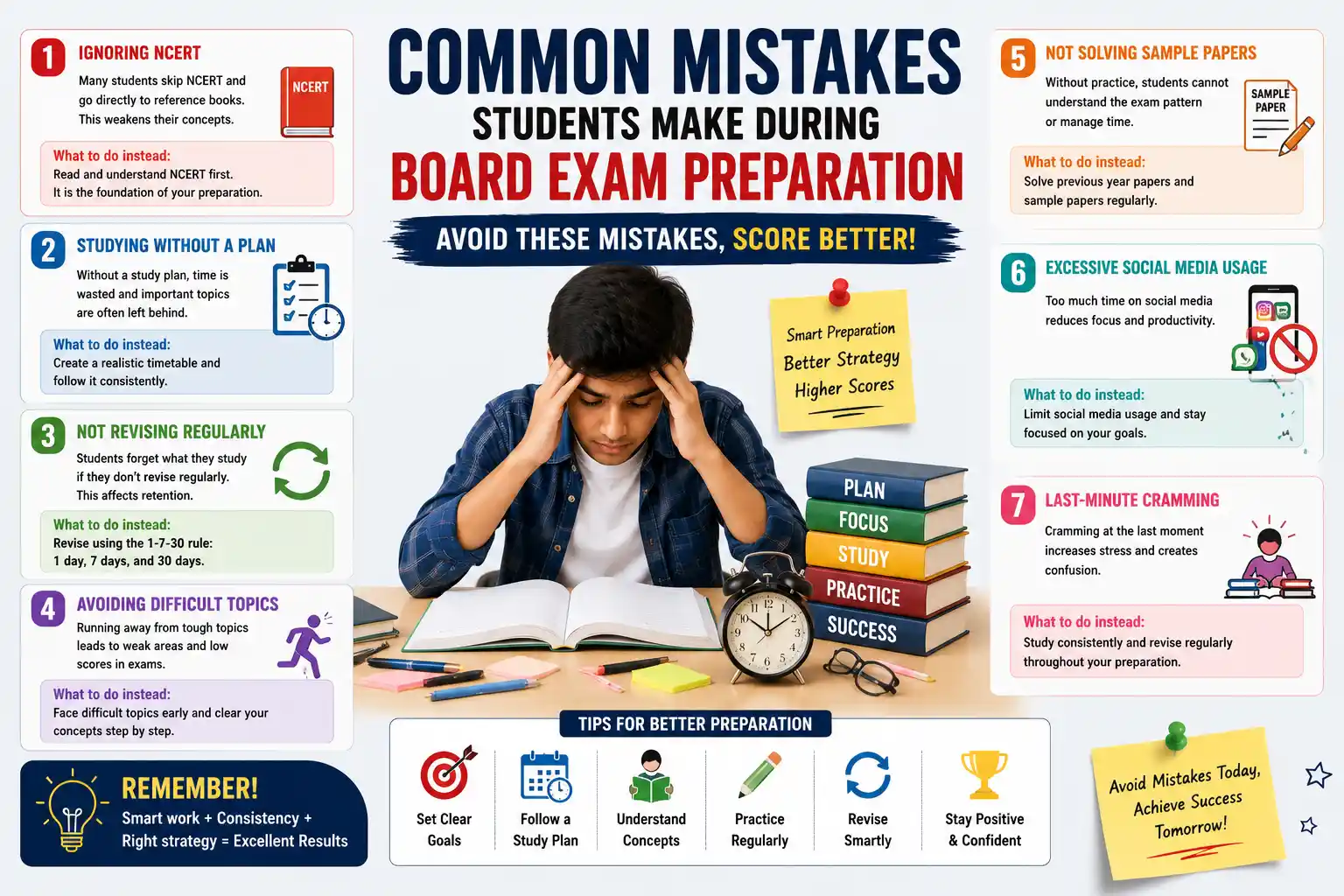
NCERT textbooks are the foundation of board exams. Most examination questions are directly or indirectly based on NCERT concepts. Before moving to reference books, ensure complete mastery of NCERT chapters.
Practice Writing Answers
Reading alone is not enough. Writing answers improves retention and speed. Practice:
- Long Answer Questions
- Short Answer Questions
- MCQs
- Case-Based Questions
Importance of Revision
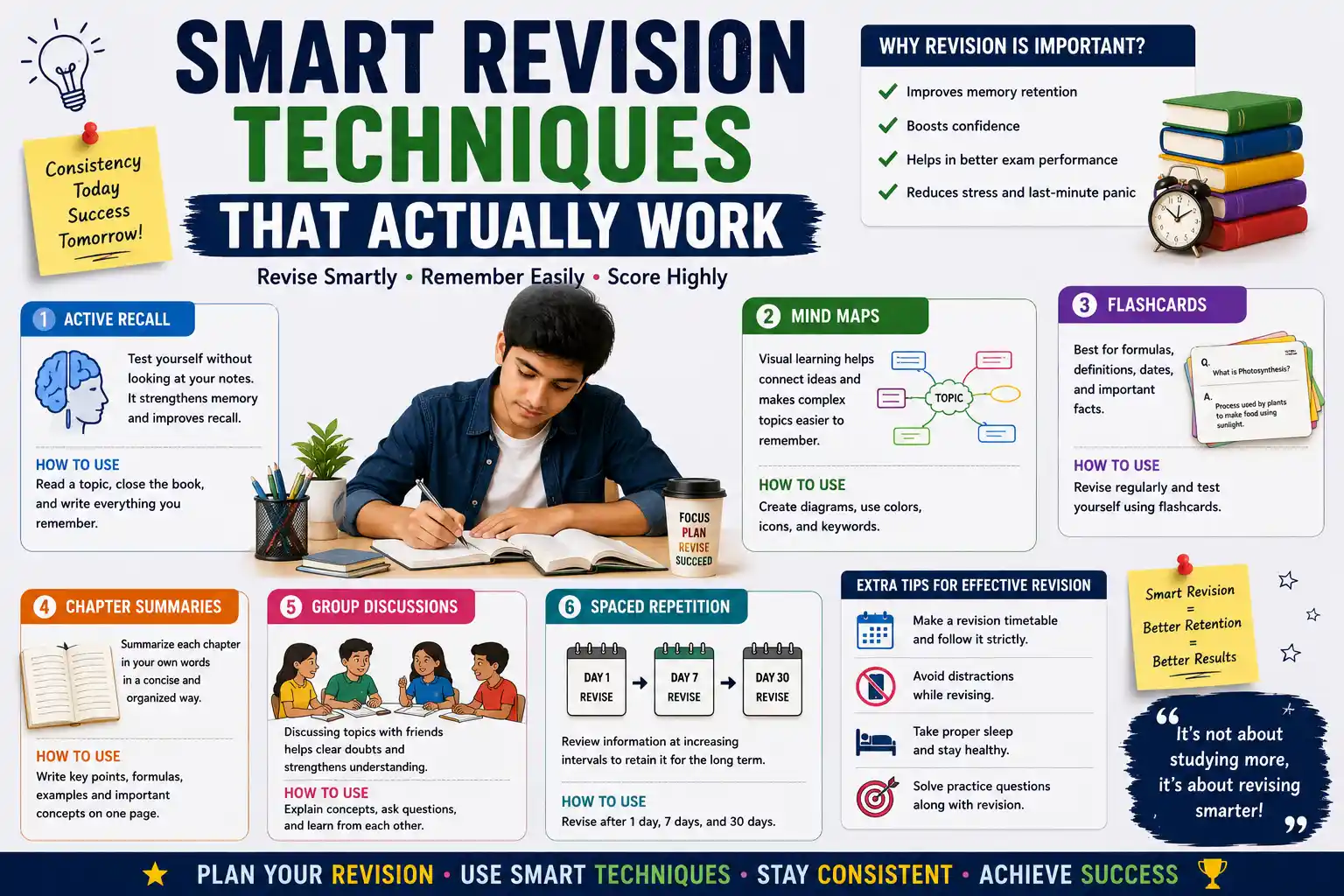
Revision is the key to long-term memory. Follow the 1-7-30 revision rule:
- Revise after 1 day
- Revise after 7 days
- Revise after 30 days
Solve Previous Year Papers
Previous year question papers help students understand:
- Question Patterns
- Frequently Asked Topics
- Time Management
Stay Healthy
Proper sleep, hydration, and exercise improve concentration. Avoid all-night study sessions before exams.
Conclusion
Success in board exams comes from consistency, smart planning, regular revision, and continuous practice. With the right strategy, scoring 95%+ is achievable without spending the entire day studying.